

Almond flour has become a staple in gluten‑free, paleo, and low‑carb baking — but not all almond flours are the same. Today, more bakers and nutrition‑focused cooks are turning to defatted almond flour, a lighter, higher‑protein alternative to traditional almond flour. Understanding the difference helps you choose the right flour for your recipes, nutrition goals, and baking style.
What Is Regular Almond Flour?
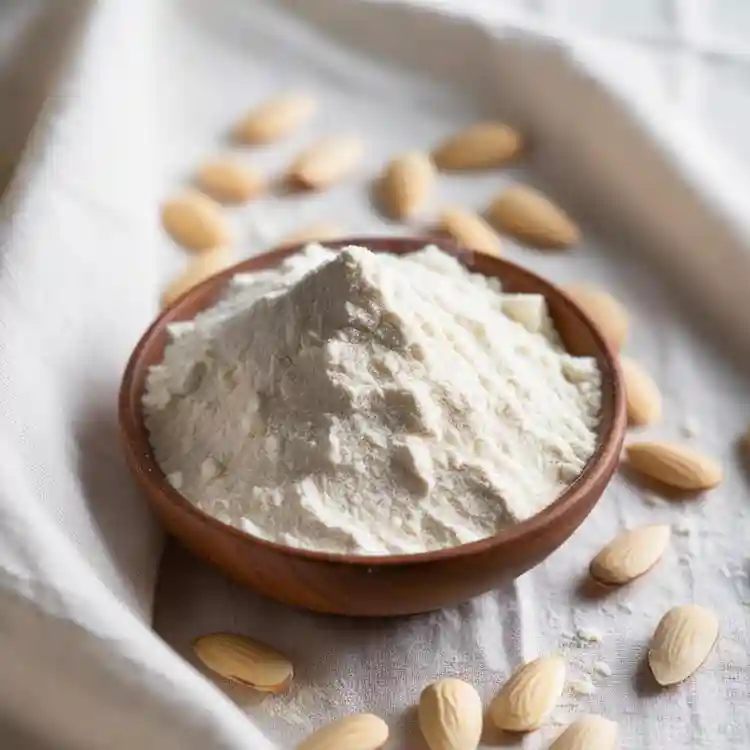
Regular almond flour is made by grinding whole almonds (usually blanched to remove the skins) into a fine, soft flour. This flour is:
- Moist and rich
- Naturally higher in healthy fats
- Mildly sweet
- Ideal for tender baked goods
Best uses: Cookies, cakes, muffins, pancakes, pastries, and recipes where moisture and richness matter.
What Is Defatted Almond Powder?
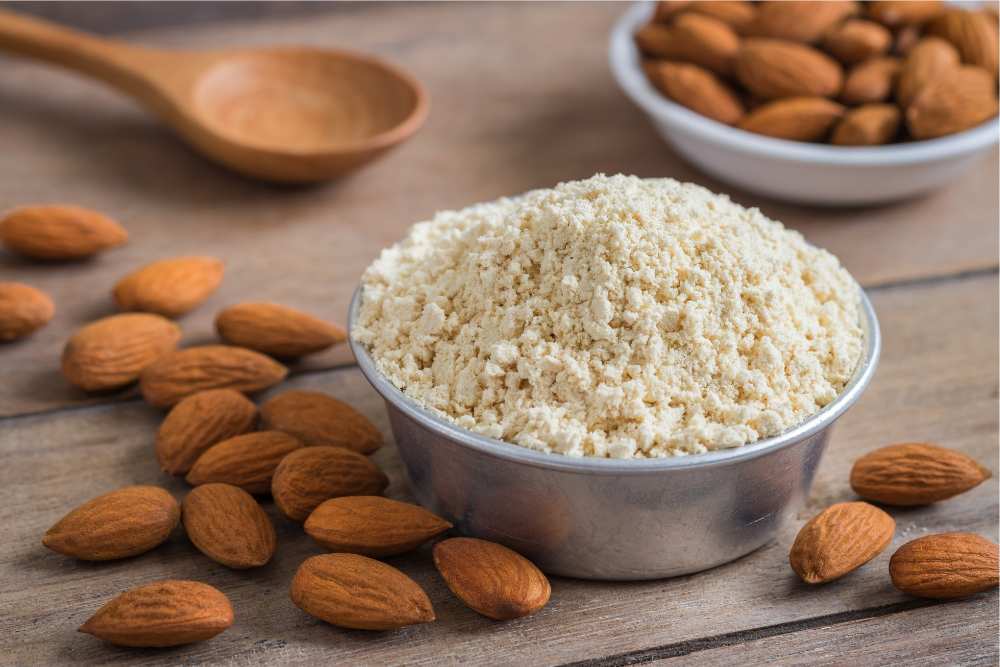
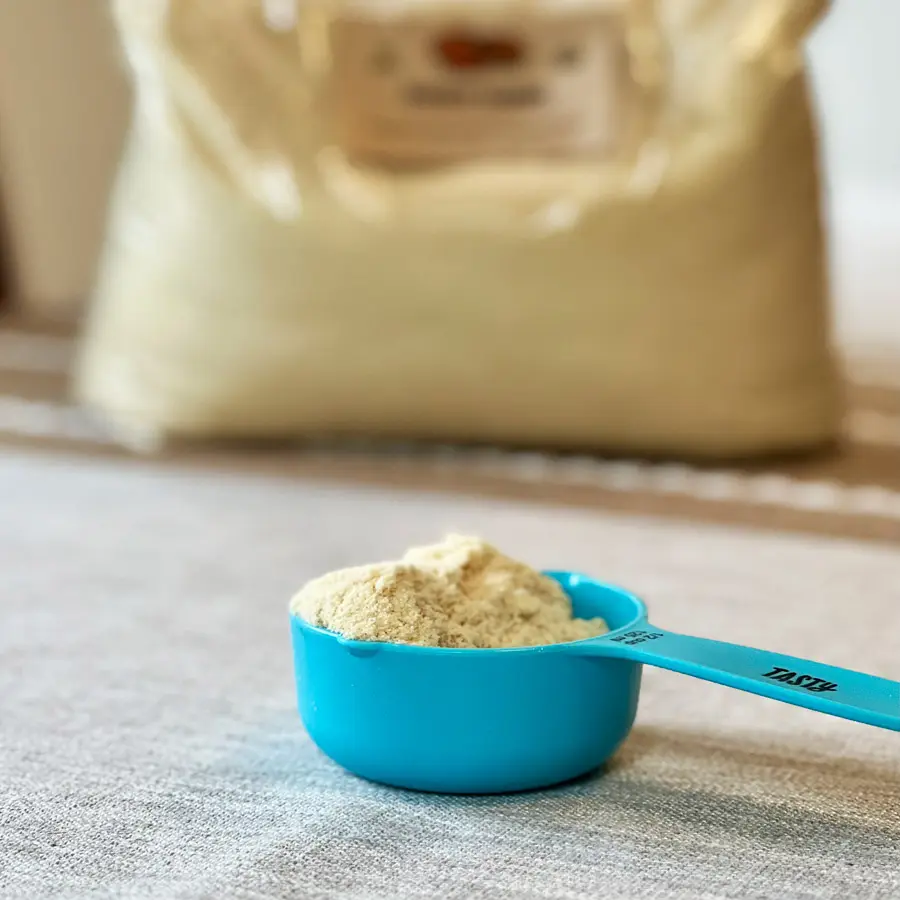
Defatted almond flour starts with almonds that have had most of their natural oils pressed out. The remaining almond solids are then finely milled into a powder. Removing the oils dramatically changes the flour’s nutrition and performance.
Defatted almond flour is:
- Much higher in protein (making it a true high protein flour)
- Lower in fat
- Drier and lighter
- More absorbent
- Neutral in flavor
This makes it a powerful ingredient for high‑protein baking, clean eating, and performance‑focused recipes.
Best uses: High‑protein breads, tortillas, crackers, pizza crusts, protein bars, and any recipe where structure and protein density matter.
Key Differences at a Glance
1. Protein Content
-
Regular almond flour: Moderate protein, higher fat
-
Defatted almond flour: Significantly higher protein per serving
If your goal is a high protein flour, defatted almond flour is the clear winner.
2. Fat Content
-
Regular almond flour retains natural almond oils
-
Defatted almond flour has most oils removed
This makes defatted almond flour ideal for low‑fat or macro‑specific diets.
3. Texture & Absorption
-
Regular almond flour is soft, moist, and rich
-
Defatted almond flour is dry, fine, and highly absorbent
Defatted almond flour often requires more liquid in recipes.
4. Baking Performance
-
Regular almond flour creates tender, moist baked goods
-
Defatted almond flour creates firmer, structured results
This is why defatted almond flour works well in high‑protein breads, crackers, and doughs.
5. Flavor
-
Regular almond flour has a mild, sweet almond flavor
-
Defatted almond flour is more neutral
This makes defatted almond flour easier to use in savory or high‑protein recipes without adding sweetness.
Which One Should You Use?
Choose regular almond flour if you want:
-
Moist, tender baked goods
-
Classic almond flavor
-
Gluten‑free pastries, cookies, or cakes
Choose defatted almond flour if you want:
-
A high protein flour
-
Lower fat content
-
More structure in breads or doughs
-
A clean, neutral base for protein‑focused recipes
-
A whole‑food alternative to high protein powder for baking
Why Bakers Love Defatted Almond Flour
Defatted almond flour is becoming popular because it offers the best of both worlds: whole‑food ingredients with the protein density of a supplement. It’s perfect for:
-
High‑protein baking
-
Meal prep
-
Fitness‑focused recipes
-
Low‑carb and keto diets
-
Gluten‑free bread alternatives
If you’ve ever wished almond flour had more protein and less fat, defatted almond flour is exactly that.
The Handy Farms Difference
Handy Farms produces premium defatted almond flour using Organic Nonpareil California almonds grown through regenerative farming. Our almond‑only facility ensures purity, consistency, and exceptional quality — giving you a clean, sustainable, high‑protein flour you can trust.
Recent Comments