

Roasted chestnuts are a comforting seasonal favorite, especially during the cooler months. With their slightly sweet, earthy flavor and tender texture, chestnuts make a delicious snack or addition to holiday meals. If you’ve ever wondered how to roast chestnuts at home, the good news is that you only need a few simple steps and an oven.
How to Prepare Raw Chestnuts for Roasting
Before oven cooking chestnuts, it’s important to prepare them properly. Chestnut shells are firm and can trap steam during roasting, so each chestnut needs to be scored before it goes into the oven.
1. Wash and Inspect the Chestnuts
Rinse the raw chestnuts under cool running water and inspect each one. Discard any that appear moldy, damaged, or unusually soft.
2. Score the Shells
Place a chestnut flat-side down on a stable cutting board. Using a sharp knife, carefully cut an X through the shell on the rounded side. Cut through the shell and inner skin without cutting deeply into the nut itself.
Never skip this step. Scoring allows steam to escape and helps prevent chestnuts from bursting during roasting.
3. Soak the Chestnuts (Optional)
Some people soak chestnuts in warm water for about 15–30 minutes before roasting. This may help loosen the shells and keep the nuts from drying out, although results can vary.
After soaking, drain the chestnuts and pat them dry.
Serves: 4 people
Prep Time: 10 minutes
Bake time: 20-30 minutes
Roasted Chestnuts
Ingredients:
- Fresh raw chestnuts
- Water for soaking (optional)
- A pinch of salt (optional) or ¼ teaspoon sea salt (for classic sea salt roasted chestnuts, for maple-glazed roasted chestnuts, for garlic butter and rosemary roasted chestnuts)
- Pinch of black pepper (optional, for garlic butter and rosemary roasted chestnuts)
-
1 tablespoon unsalted butter, melted (for garlic butter and rosemary roasted chestnuts)
-
1 garlic clove, minced (for garlic butter and rosemary roasted chestnuts)
-
1 teaspoon fresh rosemary, finely chopped
-
1 tablespoon pure maple syrup (for maple-glazed roasted chestnuts)
-
1 teaspoon olive oil or melted butter (for maple-glazed roasted chestnuts)
Equipment:
- A sharp paring knife or chestnut-scoring tool
- A baking sheet
- A clean kitchen towel
- An oven
Choose firm, fresh chestnuts with smooth, shiny shells. Avoid nuts with visible mold, holes, or soft spots.
How to Roast Chestnuts in the Oven
Oven roasting is one of the easiest ways to cook chestnuts at home. It brings out their natural sweetness while creating a tender, slightly nutty interior.

Instructions
Step 1: Preheat the oven.
Preheat your oven to 425°F (220°C) so it is ready when your chestnuts are prepared.
Step 2: Wash and inspect the chestnuts.
Rinse the raw chestnuts under cool running water. Discard any that are moldy, damaged, or unusually soft.
Step 3: Score the chestnuts.
Place each chestnut flat-side down on a stable cutting board. Using a sharp paring knife, carefully cut an X through the shell on the rounded side. Cut through the hard shell and inner skin without cutting deeply into the nut itself.
Scoring is essential because it allows steam to escape and helps prevent the chestnuts from bursting during roasting.
Step 4: Soak the chestnuts (optional).
Place the scored chestnuts in a bowl and cover them with approximately 4 cups of warm water. Let them soak for 15–30 minutes. This may help loosen the shells, although results vary.
Drain the chestnuts thoroughly and pat them dry with a clean towel before roasting.
Step 5: Arrange the chestnuts on a baking sheet.
Spread the chestnuts in a single layer on a baking sheet, with the X-shaped cuts facing upward when possible. Leave a little space between them for even roasting.
Step 6: Roast the chestnuts.
Place the baking sheet in the preheated oven and roast for 20–30 minutes. Cooking time depends on the size and freshness of the chestnuts.
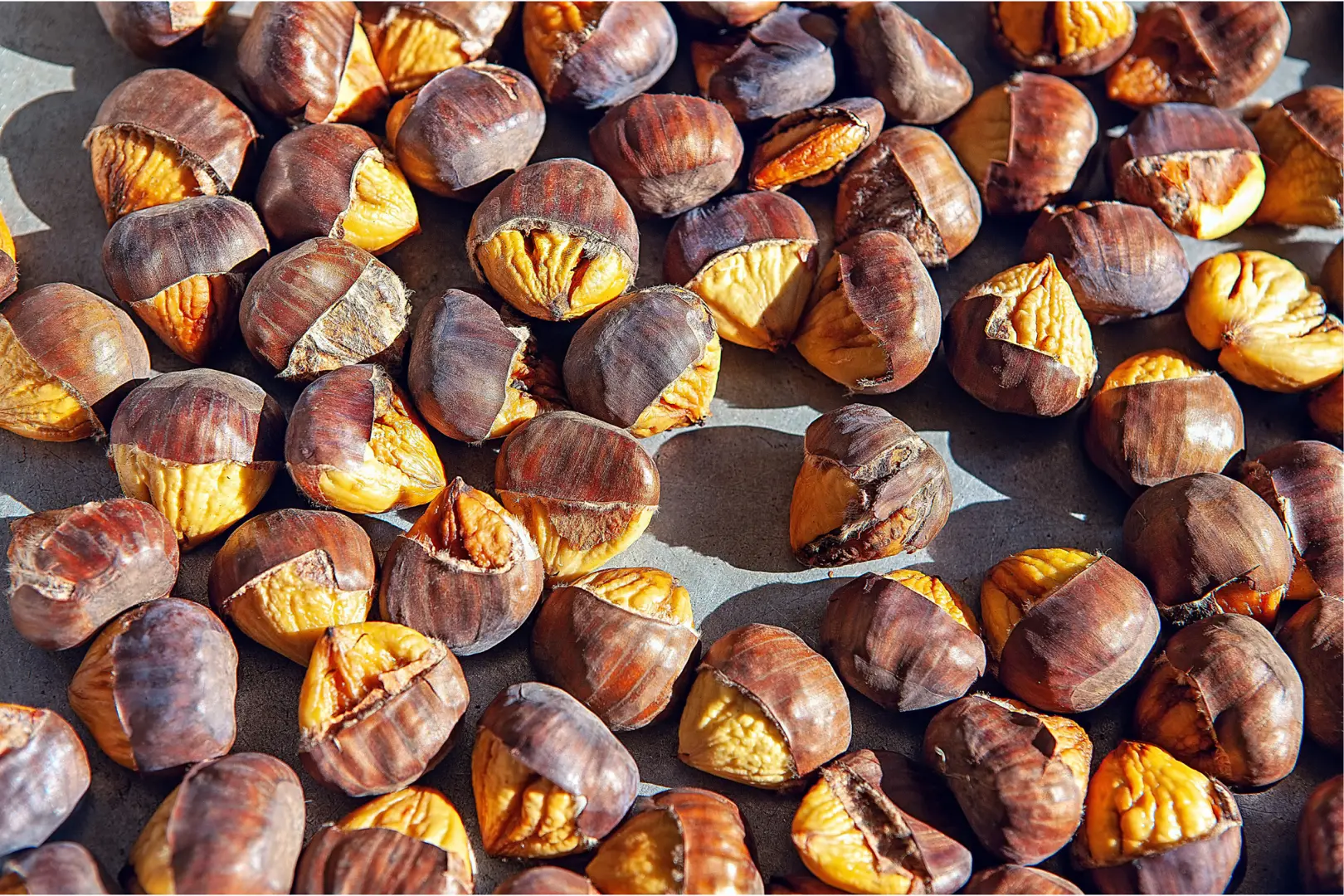
The shells should begin curling back around the cuts, and the exposed nut may develop golden spots.
Step 7: Check that they are cooked through.
Carefully remove one chestnut and allow it to cool enough to handle. Open it and check the inside. The nut should be soft and tender, not hard or crunchy. If necessary, return the remaining chestnuts to the oven for a few more minutes.
Step 8: Cover the roasted chestnuts.
Transfer the hot chestnuts to a clean kitchen towel and wrap them for about 5 minutes. This helps retain warmth and may make peeling easier.
Step 9: Peel while warm.
While the chestnuts are still warm enough to handle safely, remove both the hard outer shell and the thin inner skin. If they become difficult to peel as they cool, work in small batches and briefly rewarm them.
Step 10: Serve and enjoy.
Serve the peeled chestnuts warm, with a pinch of salt if desired. Enjoy them as a snack or add them to soups, stuffing, roasted vegetables, and other seasonal dishes.
Tips for Perfectly Roasted Chestnuts
A few simple techniques can make a noticeable difference when roasting chestnuts.
- Choose fresh chestnuts. Freshness affects flavor, texture, and how easily the nuts peel.
- Score every chestnut. This is an essential safety step that allows steam to escape.
- Avoid overcrowding the pan. A single layer helps the chestnuts roast evenly.
- Peel them while warm. The shells and inner skins generally become more difficult to remove as the chestnuts cool.
- Adjust the roasting time as needed. Larger chestnuts may take longer, while smaller ones may cook more quickly.
- Check the interior before serving. Properly roasted chestnuts should be tender throughout.
How to Eat Roasted Chestnuts
Freshly roasted chestnuts are delicious on their own, but they’re also a versatile ingredient for seasonal meals.
Try adding peeled chestnuts to:
- Roasted vegetable dishes with squash, carrots, or Brussels sprouts.
- Stuffing and savory holiday sides.
- Soups for a naturally sweet, earthy flavor.
- Rice, grain bowls, or warm salads.
- Desserts and baked goods that benefit from their mild, nutty taste.
You can also enjoy them warm with a small pinch of salt for a simple seasonal snack.
How to Store Raw and Roasted Chestnuts
Fresh raw chestnuts contain more moisture than many other nuts, so they generally require refrigeration rather than pantry storage. Keep them in a breathable bag in the refrigerator and check them regularly for spoilage.
Once roasted and peeled, chestnuts should be cooled promptly and stored in an airtight container in the refrigerator. For best quality, use them within a few days, or freeze them for longer storage.
Always discard chestnuts that develop mold, an unpleasant smell, or other signs of spoilage.
Frequently Asked Questions About Roasting Chestnuts
How long does it take to roast chestnuts in the oven?
Most chestnuts take approximately 20–30 minutes in a preheated 425°F oven. Cooking time varies depending on their size and freshness, so check that the interiors are tender before serving.
Do you have to boil chestnuts before roasting them?
No. You can roast raw chestnuts directly in the oven after scoring their shells. Soaking is optional, and boiling is not required for the oven-roasting method.
Why are my roasted chestnuts difficult to peel?
Chestnuts may be difficult to peel if they have cooled too much, are not fully cooked, or have a particularly stubborn inner skin. Try peeling them while warm and returning small batches to the oven briefly if necessary.
Can you eat raw chestnuts?
Although some chestnuts are sold raw, they are generally enjoyed cooked. Avoid confusing edible sweet chestnuts with horse chestnuts, which are toxic and should never be eaten.
What temperature is best for oven cooking chestnuts?
A temperature of 425°F (220°C) works well for roasting chestnuts. It provides enough heat to cook the interior while allowing the shells to split along the scored cuts.
Recent Comments