

Walnuts have long been a favorite snack and baking ingredient, known for their earthy flavor, satisfying crunch, and nutritional value. But did you know there’s a stunning red variety? Red walnuts combine everything we love about regular walnuts with a colorful twist.
Red walnuts are not only beautiful, but they also raise a lot of questions: What are red walnuts? Are red walnuts good for you? Are they healthier than regular walnuts? At Handy Farms, we are proud to grow organic, regenerative red walnuts, and we’re excited to answer all these questions!
What Are Red Walnuts?
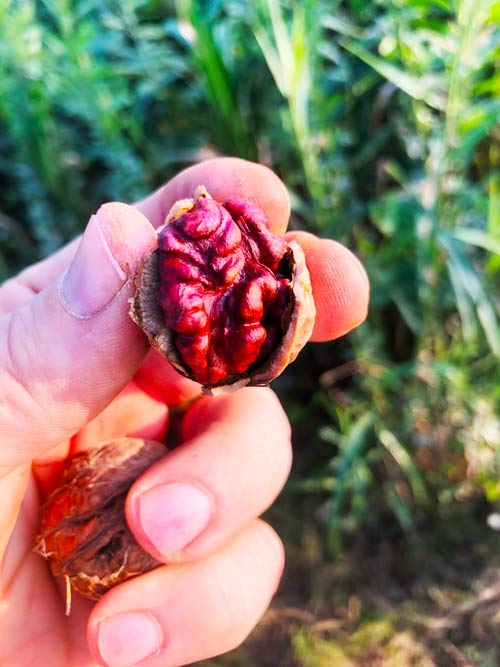
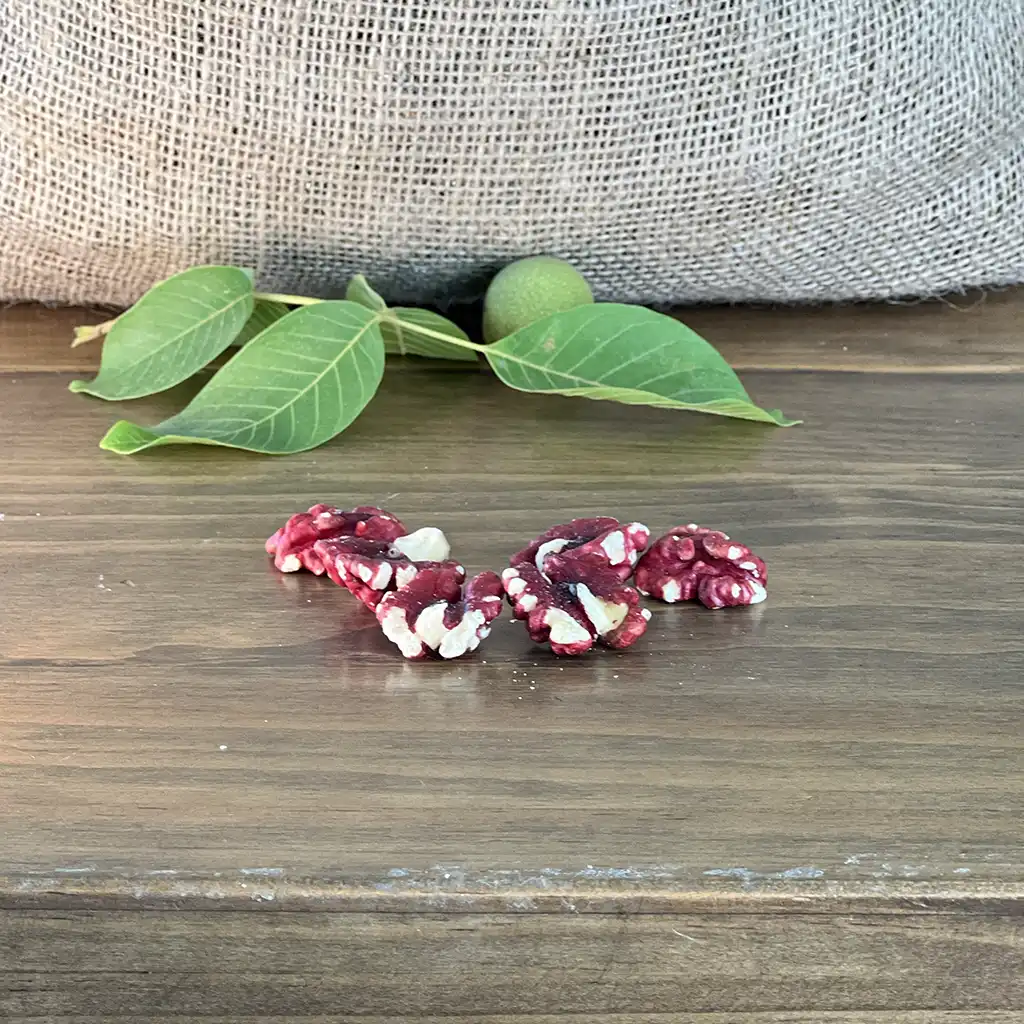
Red walnuts are a naturally bred hybrid that combine the rich flavor of English walnuts with a red-skinned walnut variety. They look striking, with a deep crimson outer skin, and they have a delicious, buttery texture. Unlike dyed or artificially altered nuts, their color comes from natural cross-breeding techniques.
Are Red Walnuts Good for You?
Absolutely. Red walnuts share the same nutritional powerhouse profile as standard walnuts but with some added perks:
- Rich in Omega-3s for cardiovascular and brain health
- Loaded with antioxidants, thanks to their red pigments
- Plant protein and dietary fiber to support energy, satiety, and digestion
Because of their bold red skin, red walnuts are particularly rich in polyphenols, a type of antioxidant that fights free radicals in the body. This makes them a colorful and nutrient-dense addition to your diet.
Are Red Walnuts Healthier Than Regular Walnuts?
While both varieties are highly nutritious, many believe that red walnuts may have a slight edge in antioxidant levels because of the vibrant red coloring. In deep colored fruits like pomegranates and blueberries, these pigments are linked to stronger antioxidant activity.
Red Walnuts vs. English Walnuts
Here at Handy Farms, we grow both organic red walnuts and organic English walnuts. So which one is better? It all depends on your preferences. Here’s how they compare:
- Flavor: English walnuts have an earthy flavor, while red walnuts have a creamier taste. Red walnuts are also milder, with less of the bitterness that’s often present in English walnuts.
- Nutrition: Both are nutrient-rich, but the pigments in red walnuts suggest they may contain higher levels of antioxidants.
- Appearance: Red walnuts win when it comes to presentation. Their striking color makes any dish pop.
- Uses: English walnuts are traditionally used in baking, cooking, and nut mixes. Red walnuts can also be used for baking and are perfect for snacking and mixing into salads and desserts; Their bright color makes every dish more impressive.
How to Enjoy Red Walnuts
The naturally mild and slightly sweet flavor of red walnuts makes them versatile. Here are our favorite ways to enjoy red walnuts:
- Sprinkled over oatmeal or yogurt
- Tossed into salads
- Paired with cheeses or charcuterie boards
- Baked into cookies and breads
- Simply eaten by the handful

Where to Buy Organic Red Walnuts
Red walnuts are less common and often not stocked in local grocery stores. Handy Farms makes them accessible by offering fresh, organic, regeneratively grown red walnuts straight from our orchards in California. By purchasing directly from the farm, you get fresh, premium quality while supporting sustainable agriculture.
Organic Regenerative Red Walnuts at Handy Farms
So, are red walnuts good for you? Without a doubt. They carry all the health advantages of standard walnuts and possibly even more, thanks to their antioxidant-rich red skin. With their smooth taste and striking look, red walnuts are a nutrient-dense upgrade for your diet.
Discover Handy Farms’ organic red walnuts today and enjoy a rare beauty, or order the classic organic English walnuts for your kitchen.

Recent Comments